7 May 2026· Laatst bijgewerkt May 2026
Twee muzikanten of acht? Stem de grootte van je bruiloftsband af op het aantal gasten, de locatie en het budget met deze praktische gids van Lupa Entertainment.
De grootte van je band bepaalt het energieplafond van je bruiloft. Een jazztrio op een feest met 200 gasten krijgt de bas nooit in de borst van de mensen, hoe goed de spelers ook zijn. Een negenkoppige showband op een intiem diner met 40 gasten overweldigt de ruimte en verbrandt budget dat je elders had kunnen besteden. De juiste grootte is een functie van drie variabelen, en het is makkelijker dan de meeste stellen denken.
Het snelle antwoord: bandgrootte op basis van aantal gasten
| Gasten | Aanbevolen bezetting | Indicatieve prijs (NL 2026) |
|---|---|---|
| 20 tot 50 | Akoestisch duo, jazztrio, solo met backing | op aanvraag |
| 50 tot 100 | Viermansformatie (zang, toetsen, bas, drums) | op aanvraag |
| 100 tot 200 | Vijf- tot zesmansformatie (gitaar, percussie of sax toevoegen) | op aanvraag |
| 200 tot 350 | Zes- tot achtmansformatie (blazerssectie of strijkers toevoegen) | op aanvraag |
| 350+ | Volledige showband van acht tot tien man | op aanvraag |
Gebruik dit als startpunt en pas dan aan op basis van locatie en ambitie.
De drie variabelen die de bandgrootte bepalen
1. Aantal gasten
Het eerste instinct klopt. Meer gasten hebben een grotere band nodig om de zaal en de dansvloer te vullen. Onder de 50 gasten voelt een kleine band intiem en gesprekvol. Boven de 200 klinkt een kleine band dun en bereikt de dansvloer nooit kritische massa.
De drempel die de meeste stellen missen is de grens van 100 tot 120. Daaronder is een viermansformatie genoeg. Daarboven wil je vrijwel altijd minimaal vijf, en idealiter zes, want die vijfde of zesde speler (sax, gitaar, percussie, leadzanger) maakt het verschil tussen achtergrondmuziek en een centrale show.
2. Locatiegrootte en -vorm
Vierkante zaal of lange rechthoek? Binnen met lage plafonds of buiten met de hemel boven je? Hoge plafonds slokken volume op en dan kan een viermansformatie klein voelen. Lange smalle ruimtes verbergen de band voor de helft van de gasten en vragen om meer visuele aanwezigheid. Buitententen hebben meer power nodig omdat er geen muren zijn die het geluid terugkaatsen naar het publiek.
Een jazztrio in de balzaal van het Amstel Hotel voelt ondermaats. Datzelfde trio tijdens een cocktailuur bij een privevilla in Toscane is precies goed. Zelfde muzikanten, andere ruimte, andere fit.
3. Het moment in de bruiloft
De bandgrootte die je nodig hebt, verschuift door de dag heen.
Daarom zijn hybride boekingen voor veel bruiloften logisch. Drie muzikanten voor ceremonie en receptie. Zes muzikanten voor het feest.
Bezettingssamenstelling: wat elke muzikant toevoegt
Het gaat niet alleen om het aantal. Het gaat om wat elke speler meebrengt. De standaard professionele bruiloftsbandbezettingen in Nederland zien er zo uit.
**Duo (2 muzikanten):** Zang plus gitaar of piano. Akoestisch, intiem, werkt voor ceremonies en diners tot 50 gasten. Kan een dansvloer niet langer dan 30 minuten vullen.
**Trio (3 muzikanten):** Bas of een tweede stem erbij. Jazztrios gebruiken piano, bas, zang. Akoestische trios gebruiken zang, gitaar, percussie. Goed voor recepties en kleine diners.
**Viermansformatie (4 muzikanten):** De kleinste bezetting die een dansvloer kan vullen. Zang, toetsen of gitaar, bas, drums. Werkt voor 50 tot 100 gasten als de act echt professioneel is.
**Vijfmansformatie (5 muzikanten):** Een tweede stem of leadgitaar erbij. Dit is de meest geboekte bruiloftsbezetting in Nederland omdat ze elk muzikaal tijdperk geloofwaardig dekt.
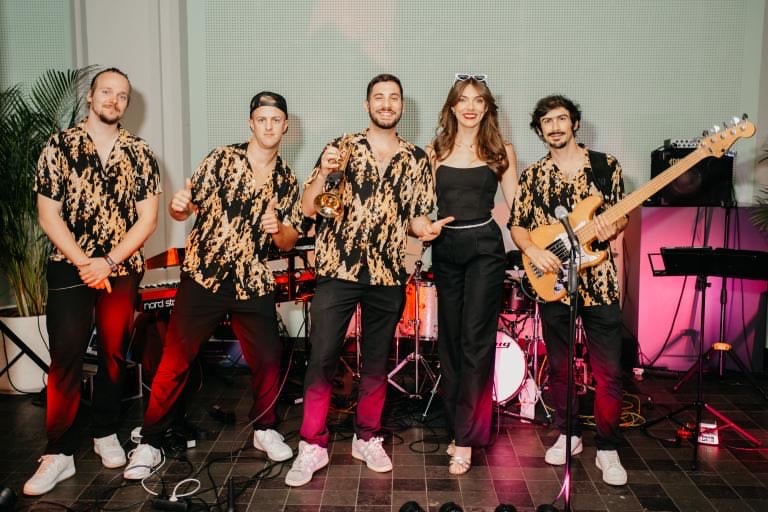
**Zesmansformatie (6 muzikanten):** Een saxofonist of percussionist erbij. De eerste bezetting die echt aanvoelt als een "showband". 100 tot 200 gasten is de sweet spot.
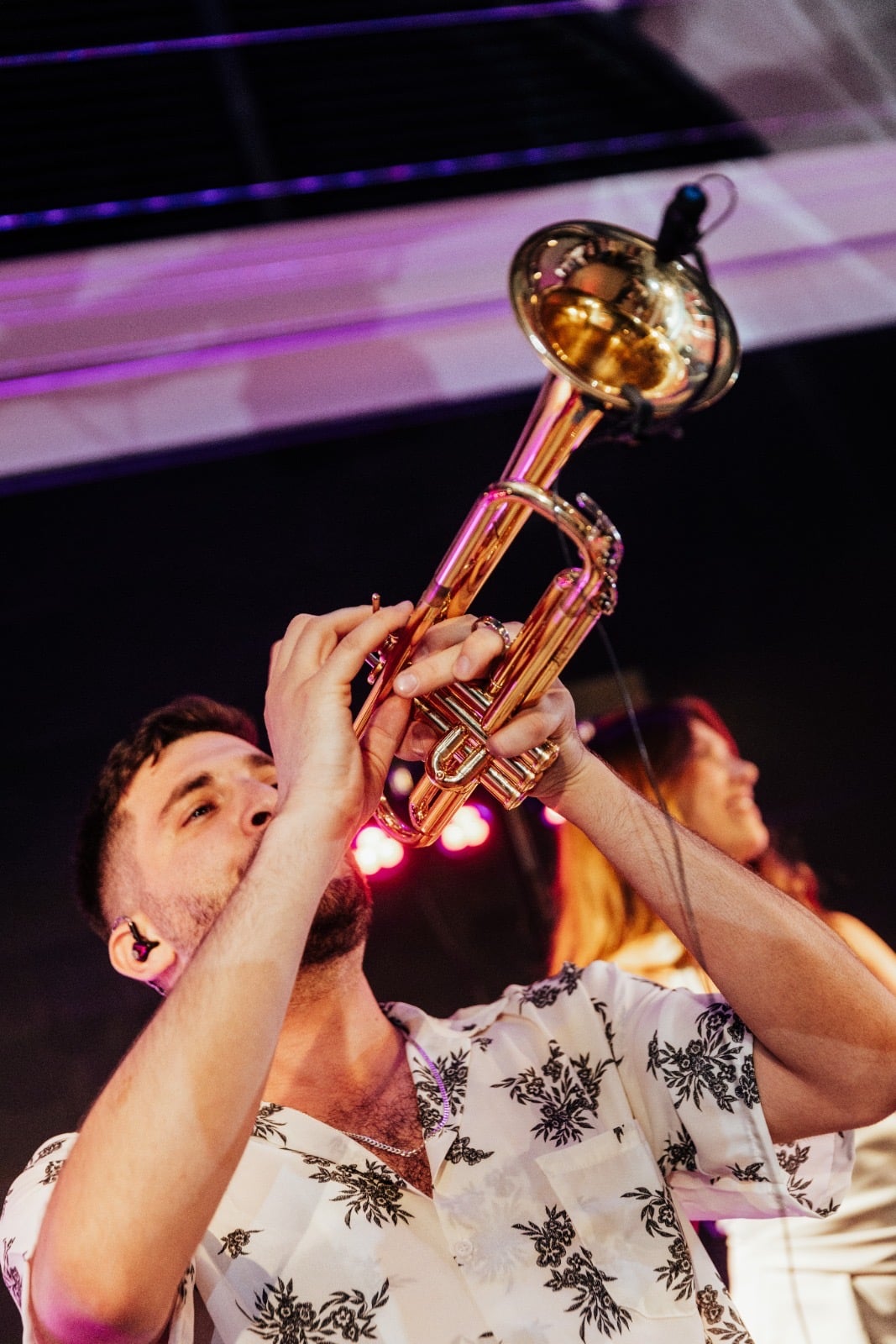
**Zeven- tot achtmansformatie (7 tot 8 muzikanten):** Blazerssectie (trompet plus trombone of sax) of strijkers erbij. Vereist voor 200+ gasten als je een echte feestsfeer wilt. Hier begin je ook het soort blaaslijnen te horen die een soul- of funkset onvergetelijk maken.
**Showband van negen tot tien man:** Volledige blazers, dubbele zang, vaste percussie. Het niveau van een Heineken- of Microsoft-bedrijfsgala. Visueel indrukwekkend, sonisch enorm, geprijsd in lijn daarmee.
De fout die de meeste stellen maken
De meest gemaakte boekingsfout op Nederlandse bruiloften is het kiezen van een band die een maat te klein is. Stellen stellen zich een intieme, verfijnde bruiloft voor en boeken een trio voor 120 gasten. Dan vragen ze zich om 23:00 af waarom niemand danst.
De reden is niet het trio. De reden is dat het akoestisch-jazzformaat verkeerd is voor het moment. Een trio op een feest met 120 gasten kan prachtig spelen tijdens het diner. Om 22:00 heeft de ruimte meer bas, meer blazers, meer lichamen op het podium nodig. Drie muzikanten kunnen die energie niet leveren omdat het format dat niet toelaat.
De oplossing is een van twee dingen. Of vergroot de band voor de avond (daarom is een viermansformatie de praktische ondergrens voor elke bruiloft met dansen), of verdeel de dag over verschillende acts (trio voor ceremonie en diner, volledige band voor dansen).
De omgekeerde fout bestaat ook, maar is zeldzamer. Soms boeken stellen een achtmansformatie voor 60 gasten omdat het indrukwekkend klinkt. Het resultaat is een band die de ruimte overweldigt, geen plek voor de blazers om te zitten, decibelproblemen en het meeste budget weg aan muzikanten die de ruimte niet kan gebruiken.
Hoe decibelgrenzen op de locatie de bandgrootte beinvloeden
Een decibelplafond van 92 dB op de locatie beperkt de bandgrootte meer dan welke andere factor ook. Zesmansformaties met blazers produceren meer dan 100 dB op het podium. Ze kunnen onder het plafond spelen met goed monitorbeheer, maar het beperkt de show.
Dit is een van de onderschatte redenen om eerst met je locatie te praten. Heb je een plafond van 90 dB en een einduur op zondagavond, dan is een achtmansformatie soulband de verkeerde keuze. Een akoestisch-elektrische viermansformatie met een enkele blazer is misschien de juiste.
Wij hebben bruiloften geproduceerd in kastelen waar het plafond 85 dB was. Die deden we met een verfijnde zesmansformatie die de niveaus zorgvuldig beheerde, plus een DJ voor het latere deel van de avond als de band uitloopt. Los altijd eerst de locatiebeperking op, en pas de bandgrootte daar dan op aan.
Veelgestelde vragen
Is een viermansformatie genoeg voor een bruiloft met 100 gasten?
Voor een verfijnde bruiloft met gesprek als prioriteit: ja. Voor een bruiloft waar dansen het hoofdevenement is, is een vijf- of zesmansformatie veiliger. Het kantelpunt ligt rond de 100 tot 120 gasten met dansen als focus.
Kan een jazztrio de hele bruiloft spelen?
Voor ceremonies, recepties en diner: ja. Voor vier uur laat dansen met 150 gasten: nee. Jazztrios kunnen dat volume en die energie niet dragen. Ze kunnen het cocktailuur op elke grootte bruiloft prachtig dragen.
Wat is de kleinste band die een dansvloer kan laten lopen?
Een professionele viermansformatie met zang, toetsen, bas en drums. Daaronder kan het format een dansvloer niet langer dan 30 minuten dragen.
Telt een saxofonist toevoegen als het vergroten van de band?
Ja. Een viermansformatie plus saxofonist werkt qua energie effectief als een vijfmansformatie, ook al is de viermansformatie de kerneenheid. Een sax toevoegen is de meest kostenefficiente manier om een band op te tillen voor een bruiloft die meer punch nodig heeft.
Hoeveel duurder is elke extra muzikant?
De vuistregel in Nederland is op aanvraag per muzikant, afhankelijk van het niveau en de rol. Een standaardspeler kost extra op aanvraag. Een leadzanger of blazer in de spotlight kost extra op aanvraag.
Kan ik de bezettingsopties zien voordat ik boek?
Ja, bij elk gerenommeerd bureau. Bij Lupa draaien we voor de meeste van onze acts geschaalde bezettingen. Dezelfde bandleider kan de act aanbieden als vier-, zes- of achtmansformatie afhankelijk van je eventgrootte en budget.
Beveel je ooit een kleine band aan boven een grote?
Vaak. Voor 60 tot 80 gasten op een intieme boutique-bruiloft wint een gepolijste viermansformatie het elke keer van een achtmansformatie. De energie klopt, het budget gaat naar andere dingen en de ruimte heeft de juiste maat.
Hoe zit het met een combinatie van band en DJ?
Dit is het populairste premiumformat. Zesmansformatie voor diner en vroege avond, DJ voor de late uurtjes. De band doet de live-momenten, de DJ doet continu draaien tot 02:00. Het totale aantal bandleden wordt effectief zeven, waarvan een de DJ.
Is groter altijd beter voor een bedrijfsevenement?
Nee. Voor bedrijfsdiners en conferenties is kleiner en verfijnder meestal juist. We hebben events geproduceerd voor Heineken en Microsoft met viermansformaties die perfect werkten omdat de briefing achtergrond en sfeer was. De achtmansformatie komt eruit voor het gala, het kerstfeest, de activatie, niet voor het AVA-diner.
Hoe stem ik de bandgrootte af op het budget?
Begin met de gasten, de locatie en het moment. Kies de kleinste band die op die drie past. Vraag dan je bureau om twee aangrenzende maten (een kleiner, een groter) zodat je ziet wat elk niveau kost. Bij Lupa offreren we meestal twee of drie opties per event, zodat je de prijsstap tussen een vijf- en een zesmansformatie direct ziet.
Wat wij zouden doen
Vertel ons je aantal gasten, de locatie en hoe je wilt dat de avond aanvoelt, en wij raden een bandgrootte en drie specifieke acts aan. We hebben gecureerde bezettingen in elke maatklasse van akoestisch duo tot tienmansshowband, allemaal premiumniveau. Vraag een advies op maat aan en we reageren binnen vierentwintig uur.
De Lupa-acts die we hiervoor aanraden
Elk van onze acts is gecureerd voor een specifiek soort ruimte. Drie van de meest geboekte bij Lupa voor de onderwerpen op deze pagina:
Bekijk het volledige artiestenoverzicht voor de rest van het programma.
Een event aan het plannen?
14 persoonlijk geselecteerde acts, bands, dj's en ensembles, klaar om jouw event onvergetelijk te maken.