
30 April 2026· Laatst bijgewerkt May 2026
De exacte vragen die je een bruiloftsband moet stellen voordat je het contract tekent. Vang verborgen kosten, vervangingen in de bezetting en de zaken die niemand uit zichzelf noemt.
Waarom deze lijst belangrijk is
Een boeking van een bruiloftsband heeft een lange staart. Je tekent vandaag het contract en de gevolgen komen 9 tot 18 maanden later. Tegen die tijd is het gesprek dat je had moeten voeren voorbij.
Deze twintig vragen kosten ongeveer dertig minuten gesprek. Ze besparen je honderden euro's, meerdere ruzies en het slechtste gevoel op een bruiloft: beseffen dat de band die je hebt geboekt niet de band is die is komen opdagen.
Vragen over de bezetting
1. Welke muzikanten treden op tijdens onze bruiloft?
De allerbelangrijkste vraag. Sommige bureaus opereren als marketplaces en vervangen muzikanten zonder het stel te informeren. Vraag altijd om de namen op schrift.
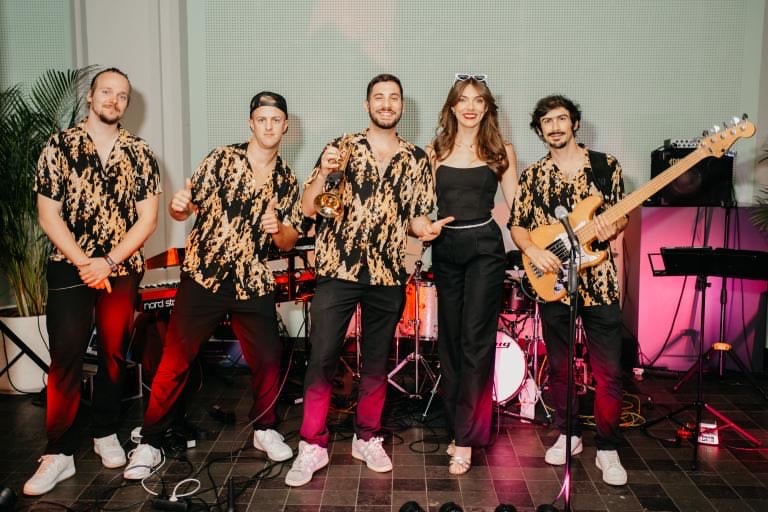
Bij Lupa bevestigt elke boeking de bezetting op naam in het contract, met een aangewezen invaller per rol. Acts als **Benga Band**, **Drumpet Disco** en **Dupa Trio** worden geboekt als vaste line-ups, niet als uitwisselbare rosters.
2. Wat is je beleid als een muzikant ziek wordt?
Een goed bureau heeft een duidelijk schriftelijk noodplan: een aangewezen invaller per rol, een terugvalband in vergelijkbare stijl, of een gegarandeerde volledige terugbetaling als de bezetting niet kan worden vervangen.
Vage antwoorden als "we vinden altijd iemand" zijn een rode vlag. Net als "dit gebeurt nooit". Het gebeurt wel. Plan ervoor.
3. Hebben alle muzikanten al eerder samen gespeeld?
Een band van sessiemuzikanten die nooit eerder als groep hebben samengespeeld klinkt individueel verzorgd en collectief slordig. Vraag hoe lang de huidige bezetting al samen is.
Vaste bands als Benga Band en Drumpet Disco repeteren wekelijks en spelen 40 tot 60 bruiloften per jaar samen. Dat creeert de chemie in de zaal.
Vragen over het optreden
4. Hoe lang spelen jullie en hoe is de tijd verdeeld?
De industrienorm is drie sets van 45 minuten met twee pauzes van 15 tot 20 minuten, in totaal ongeveer drie uur livemuziek over een avond van vier uur. Sommige bands spelen langer tegen meerprijs.
Als een band zegt dat ze "de hele nacht" spelen, vraag dan hoeveel minuten livemuziek dat precies is. Het antwoord zijn meestal dezelfde drie sets.
5. Wat speelt er tijdens de pauzes?
Ofwel de eigen playlist van de band ofwel jouw DJ. Bevestig welke.
Een premium boeking bevat een samengestelde pauzeplaylist die de energie tussen sets overbrugt. Zonder dit loopt de dansvloer leeg bij elke pauze.
6. Kunnen jullie ons openingsdanslied leren?
Vrijwel elke professionele band kan een of twee custom nummers per bruiloft leren. De standaard verwachting is het openingsdanslied plus een ander.
Meer dan twee custom nummers brengt meestal leerkosten met zich mee. Als je nummer bijzonder complex is (operavocaal, prominente strijkersarrangement, ongebruikelijke maatsoort), vraag dan of de band het recht kan doen voordat je je vastlegt. Een goede band raadt soms een alternatief arrangement aan.
7. Hoe nemen jullie verzoeken van gasten aan tijdens de bruiloft?
De meeste professionele bands accepteren verzoeken als het nummer in hun setlist staat. Nummers buiten de setlist kunnen meestal niet ter plekke worden geleerd.
Vraag de band om hun setlist vooraf te sturen en identificeer eventuele "must-include" en "do-not-play" tracks tijdens de planningsfase.
8. Hoe gaan jullie om met de energie van een bruiloftspubliek?
Dit is de vraag die professioneel vakmanschap blootlegt. Een geweldig antwoord gaat over het lezen van de zaal: wanneer tempo opvoeren, wanneer terugnemen, wanneer wachten tot de vloer vol is voordat je het hoogenergieblok inzet.
Een zwak antwoord richt zich alleen op de setlist. De setlist is minder belangrijk dan het vermogen van de band om die in real time aan te passen.
Vragen over logistiek
9. Hoeveel ruimte hebben jullie nodig voor de bezetting?
Globaal:
Als de locatie dit niet kan bieden, moet de band dat vooraf weten. Een zesmansband proppen in 6 vierkante meter is een recept voor mislukking.
10. Hoeveel stroom hebben jullie nodig?
Een typische bruiloftsband heeft 4.000 tot 6.000 watt schone stroom nodig, wat meestal twee of drie aparte stroomgroepen binnen tien meter van het podium betekent. Grotere bands of bands met uitgebreide verlichting hebben meer nodig.
Dit is net zo goed een gesprek met de locatie als met de band. Informeer de locatie voor je tekent.
11. Hoe laat komen jullie aan en hoe lang duurt de opbouw?
Standaard aankomst is twee tot drie uur voor de eerste set. De opbouw omvat de soundcheck, het moment waarop problemen aan het licht komen en worden opgelost.
Vraag of de band eerder kan aankomen (en stil kan blijven) als de locatie een vroege load-in eist. Sommige locaties hebben een enkel beschikbaar load-in slot en de band moet zich daaraan aanpassen.
12. Brengen jullie eigen geluid en licht mee?
De meeste professionele bands leveren een volledig geluidssysteem dat past bij de bezetting en de zaal, plus basisverlichting. Premium verlichting (LED-uplighters, lasers, Sparkulars) is meestal een aparte post.
Bevestig precies wat erbij zit. "Geluid en licht inbegrepen" betekent soms een minimale set die geschikt is voor een zaal van 50 gasten, niet voor een receptie van 200.
13. Wat houdt jullie soundcheck in en wanneer?
Een goede soundcheck duurt 30 tot 60 minuten en vindt plaats voordat de gasten arriveren. Het overslaan van de soundcheck is de meest voorkomende oorzaak van technische problemen tijdens de eerste set.
Als de locatie geen goede soundcheck toelaat, moet de band dat vooraf weten en het technisch plan aanpassen.
Vragen over geld
14. Wat zit er bij de prijs in?
De offerte moet duidelijk scheiden:
Als een van deze ontbreekt of "nog te bevestigen" is, vraag dat nu, niet later.
15. Wat is de aanbetaling en wat is het annuleringsbeleid?
In Nederland en Belgie is de standaard een klein deel aanbetaling bij ondertekening, met het restant 30 dagen voor de bruiloft.
Annuleringsbeleid varieert. De meest voorkomende structuur:
Datumwijzigingen worden meestal apart afgehandeld en vaak binnen 12 maanden toegestaan tegen een kleine administratiefee.
16. Wat kost een extra uur?
Standaard overuren in Nederland zijn €150 tot €250 per uur voor een band en €100 tot €150 per uur voor een DJ. Sommige bands hebben een harde limiet op het aantal uren door arbeidstijdregels voor muzikanten.
Beslis voor de bruiloft of je eventueel overuren wilt en zet het tarief in het contract. Dit op de avond zelf vragen is de duurste manier om uit te lopen.
17. Brengen jullie reiskosten apart in rekening en hoe worden die berekend?
De meeste bands rekenen reizen binnen 50 kilometer van hun thuisbasis bij de prijs. Daarbuiten is het tarief meestal €0,35 per kilometer voor de hele crew, plus overnachting als de locatie meer dan twee uur weg ligt.
Voor bestemmingsbruiloften (Toscane, Ibiza, Comomeer, Provence, Bali) zijn reiskosten altijd apart en worden ze als onderdeel van het pakket geoffreerd.
Vragen over betrouwbaarheid en recensies
18. Kunnen jullie een livevideo van volledige lengte delen, niet alleen een promoreel?
Demoreels zijn het highlightpakket. Een livevideo van volledige lengte laat zien hoe de band klinkt op minuut 90 van een echte bruiloft.
Elke act op de Lupa-roster heeft volledige livevideo op de profielpagina. We vereisen dit omdat demoreels de test van een echte receptie niet doorstaan.
19. Kunnen jullie recente recensies en referenties delen?
Vraag drie referenties van bruiloften in de afgelopen twaalf maanden. Bel er minstens een.
Online recensies zijn nuttig maar selectief. Een direct gesprek met een recent stel is het meest eerlijke signaal dat je kunt krijgen.
20. Wat gebeurt er als de bruiloft wordt geannuleerd of uitgesteld?
Boven op het standaard annuleringsbeleid: vraag naar uitstel. Als je de datum verschuift, wat is dan het beleid van de band rond het vasthouden van je aanbetaling en het toepassen op een nieuwe datum?
De meeste bureaus staan een uitstel toe naar een datum binnen 12 maanden tegen een kleine administratiefee. Een tweede uitstel wordt meestal als annulering behandeld. Bevestig op schrift.
Een korte lijst van acts die deze vragen doorstaan
De Lupa-roster is specifiek gebouwd om elke vraag op deze lijst te doorstaan met duidelijke schriftelijke antwoorden:
Elke Lupa-boeking bevestigt de bezetting op naam, bevat een schriftelijk noodplan, splitst de offerte in posten en levert op verzoek volledige livevideo.
Veelgestelde vragen
Wat is de allerbelangrijkste vraag om te stellen?
"Welke muzikanten treden op tijdens onze bruiloft en kunnen jullie ze op naam bevestigen in het contract?" Dit beschermt je tegen de meest voorkomende verrassing.
Moet ik alle twintig vragen tijdens het eerste gesprek stellen?
Nee. Het eerste gesprek is voor fit en chemie. Stel er 8 tot 10. Bewaar de technische en financiele details voor de formele offertefase.
Hoe lang moet het eerste gesprek met een bureau duren?
30 tot 45 minuten. Korter betekent dat het bureau te weinig vraagt over jouw bruiloft. Langer betekent meestal dat ze aan het verkopen zijn.
Wat als de band sommige van deze vragen niet kan beantwoorden?
Ga door naar de volgende. Een professionele bruiloftsband heeft tegen het tweede jaar duidelijke schriftelijke antwoorden op al deze vragen.
Zijn deze vragen anders voor een DJ?
De bezetting vragen worden "wie is de daadwerkelijke DJ op de avond" en de apparatuurvragen zijn eenvoudiger. Al het andere is hetzelfde.
Wat als de antwoorden van de band het contract tegenspreken?
Houd altijd het contract aan. Als het mondelinge antwoord ruimer is dan het contract, vraag het bureau dan het contract aan te passen voor je tekent.
Hoe lang moet het contract zijn?
Drie tot zes pagina's. Een contract van een pagina is een rode vlag. Een contract van twintig pagina's is meestal opvulling.
Wat als ik over de prijs wil onderhandelen?
De prijzen voor bruiloftsbands in Nederland en Belgie zijn over het algemeen vast. De onderhandelingsruimte zit meestal in de duur, de add-ons en de inclusies, niet in de hoofdfee.
Moet ik een garantie vragen dat de band niet wordt vervangen?
Ja. De exacte tekst: "De in dit contract genoemde muzikanten zullen optreden op deze bruiloft, met als enige uitzondering ziekte of noodgeval, in welk geval [invaller] zal optreden." Zet dit op papier.
Wat is de meest over het hoofd geziene vraag op deze lijst?
"Wat kost een extra uur?" Dit is de post die de grootste verrassing op de dag oplevert.
Volgende stap
Neem deze lijst mee naar je eerste bureaugesprek. Als het bureau alle twintig vragen helder, schriftelijk beantwoordt, zijn ze het boeken waard.
Vraag een consult aan of bekijk de volledige Lupa-roster.
Een event aan het plannen?
14 persoonlijk geselecteerde acts, bands, dj's en ensembles, klaar om jouw event onvergetelijk te maken.