28 April 2026· Laatst bijgewerkt May 2026
Liveband of DJ voor je bruiloft? De echte verschillen in kosten, ruimte, energie en de hybride optie die steeds meer stellen kiezen.
De beslissing in een oogopslag
| Criterium | DJ | Liveband | Hybride |
|---|---|---|---|
| Gemiddelde kosten in NL 2026 | €600 tot €1.500 | €2.500 tot €6.000 | €3.500 tot €7.500 |
| Benodigde ruimte | 2 tot 3 vierkante meter | 9 tot 12 vierkante meter | 9 tot 15 vierkante meter |
| Doorlopende muziek | Ja | Nee, sets van 45 minuten met pauzes van 15 tot 20 minuten | Ja |
| Repertoire | In feite onbeperkt | 80 tot 120 voorbereide nummers | Het beste van beide |
| Opbouwtijd | 45 tot 60 minuten | 90 tot 120 minuten plus soundcheck | 120 tot 150 minuten |
| Stroomverbruik | 2.000 watt | 4.000 tot 6.000 watt | 5.000 tot 7.000 watt |
| Visuele aanwezigheid | Beperkt | Hoog | Hoog |
De cijfers laten zien waarom dit een van de meest besproken keuzes is in bruiloftsplanning. Beide opties kunnen werken. Het zijn simpelweg verschillende producten.
Wat een DJ je werkelijk geeft
Een bruiloft-DJ doet drie dingen die een band niet kan. Hij draait elk nummer uit elk decennium zonder waarschuwing. Hij stopt nooit. En hij heeft bijna geen podium nodig.
Voor bruiloften onder de 120 gasten, of avonden die door moeten lopen na middernacht, is de DJ het praktische werkpaard. Moderne bruiloft-DJs zoals **Savoy** en **Demi Elisa** op de Lupa-roster komen met hun eigen geluidsinstallatie, basisverlichting, back-up apparatuur en het vermogen om de zaal in real time te lezen. Een goede DJ schakelt moeiteloos tussen Stevie Wonder, Robyn, Drake en een Nederlandse danceklassieker zonder de dansvloer te breken.
De eerlijke zwakte van een bruiloft met alleen een DJ is precies wat hem efficient maakt. Het is een persoon. De visuele focus op de dansvloer zijn je gasten, niet de muziek. Wil je dat de muziek zelf onderdeel van het spektakel is, dan is de DJ alleen niet genoeg.
Wat een liveband je werkelijk geeft
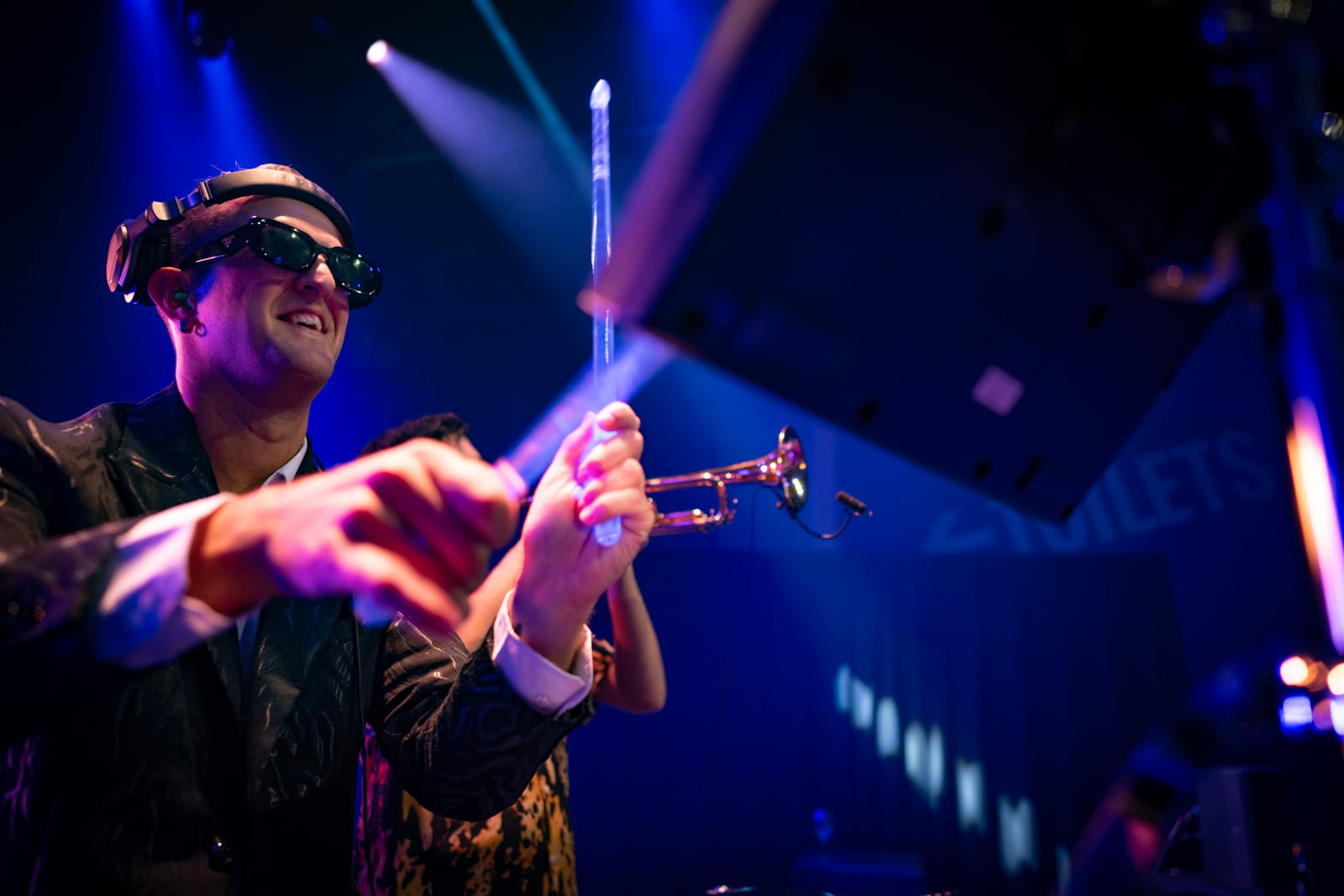
Een liveband geeft je iets wat niet te repliceren is: een echt optreden, met mensen op het podium, ogen die jouw ogen vinden tijdens de openingsdans en de onmiskenbare fysieke druk van een blazerssectie die in een ruimte speelt.
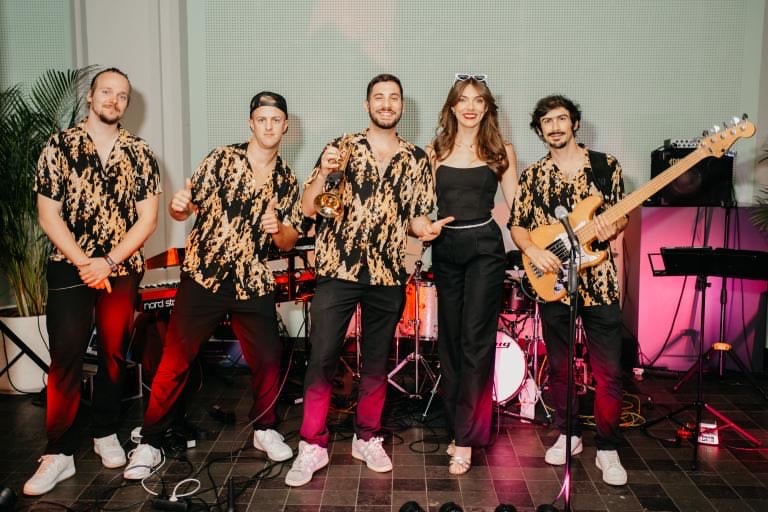
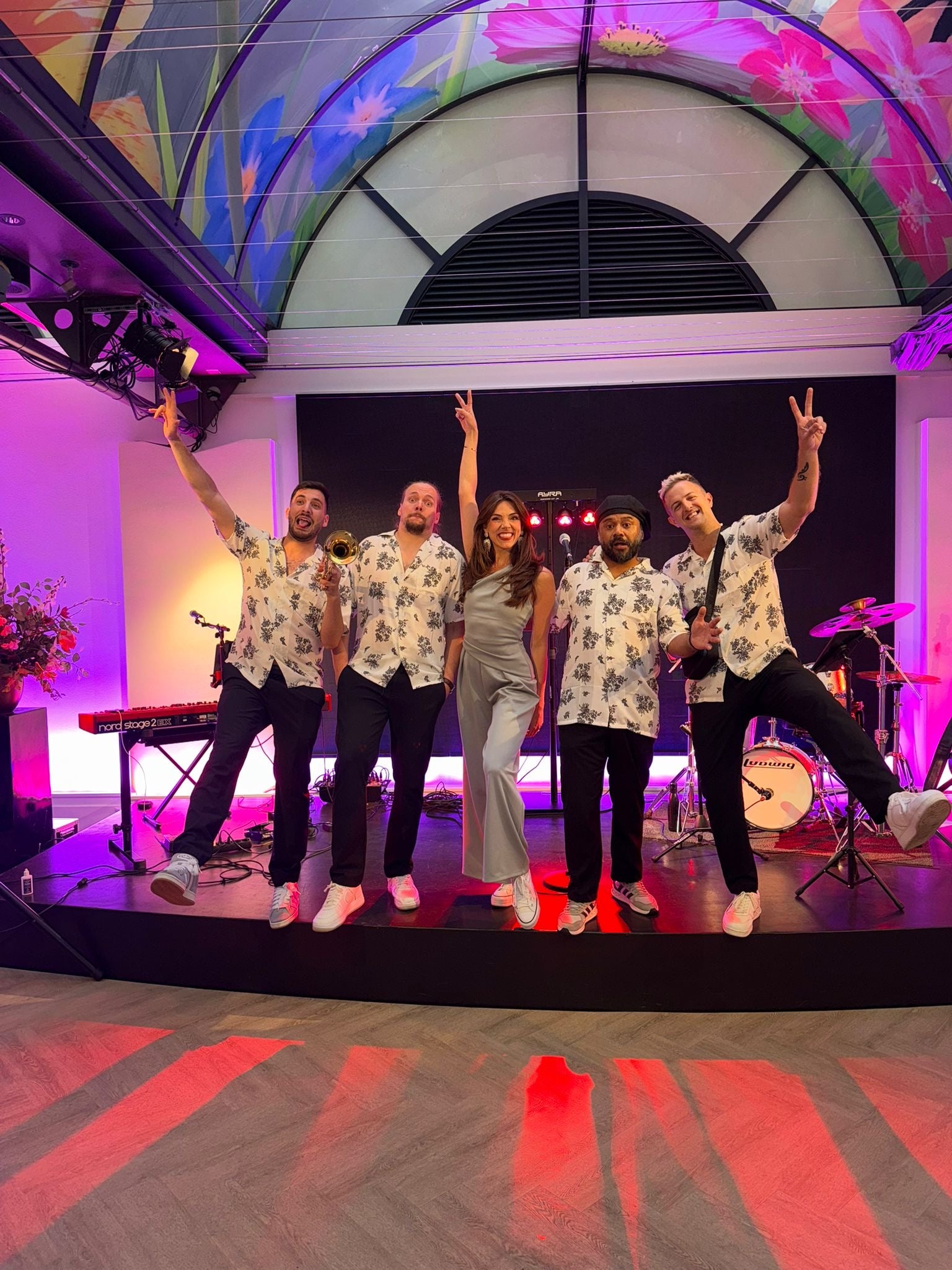
Bands als **Benga Band** (zes leden met zang en blazers) en **Drumpet Disco** (drum- en trompet-gedreven live disco) bouwen energie op via een lange boog. De eerste set is opwarmen. De tweede set is de dansvloer die opent. De derde set is de climax. Als dit goed wordt gedaan, herinneren je gasten zich specifieke momenten: de trompetsolo tijdens een bepaald nummer, de bassist die de menigte in loopt, de zanger die een slotnoot vasthoudt.
De eerlijke zwakte bestaat uit twee dingen. Bands hebben pauzes nodig. En bands hebben een beperkter repertoire dan een DJ. Als je gasten een specifiek nummer willen horen dat je niet vooraf hebt aangevraagd, heeft de band het misschien niet.
Het hybride model: nu de meest gangbare premium boeking
Voor bruiloften met meer dan 150 gasten, of voor stellen die zowel een verfijnde dinersfeer als een lang dansfeest willen, is het hybride model wat we tegenwoordig het vaakst boeken. De formule is simpel:
Het voordeel is dat je de onvervangbare aanwezigheid van livemuziek krijgt op het moment dat de zaal vol is en de energie het hoogst, en je houdt de dansvloer open zonder de muzikanten uit te putten. Het kostenverschil tussen een bruiloft met alleen band en een band-plus-DJ-hybride is meestal slechts €1.000 tot €1.500, omdat de DJ de kosten van overuren voor de band vervangt.
Een groeiend deel van de Nederlandse stellen kiest nu voor dit format, vooral bij bruiloften met meer dan 200 gasten.
Kosten in 2026: waarvoor je werkelijk betaalt
Een bruiloft-DJ in Nederland kost meestal tussen de €600 en €1.500 voor een standaard avond van vier tot vijf uur, all-in. Het bedrag stijgt voor premium DJs met live elementen, zoals saxofonist-combinaties of volledige lichtshows, die kunnen oplopen tot €2.500.
Een live bruiloftsband kost meestal tussen de €2.500 en €6.000 voor een vijf- tot zesmansbezetting met een standaard drie-set avond. Kleinere akoestische acts liggen tussen €600 en €2.400. Premium volledige bands met blazerssecties en een bekende naam liggen tussen €5.500 en €12.000.
Het hybride model komt meestal uit op €3.500 tot €7.500 totaal, wat onder de kosten ligt van een toptier-band alleen en boven die van een DJ alleen.
Waarvoor je betaalt is niet alleen de muziek. Je betaalt voor geluid, licht, BumaStemra, btw, reiskosten, de back-upband bij annuleringen, de adviestijd en het vermogen van het bureau om op de dag te leveren. Een DJ van €700 en een DJ van €1.400 doen op het moment van de muziek vaak hetzelfde. Het verschil zit overal anders.
Ruimte en technische vereisten
Dit is het meest onderschatte deel van de beslissing.
Een DJ heeft ongeveer 2 tot 3 vierkante meter nodig en een enkel stopcontact. Hij past op vrijwel elke locatie, ook bij buitenrecepties, op een jacht of in een prive-woning.
Een liveband heeft 9 tot 12 vierkante meter vlak podiumoppervlak nodig voor een vijf- tot zesmansbezetting, met een duidelijke aanvoerroute en een tot drie stroomgroepen afhankelijk van de bezetting. Een negenmans showband heeft 15 tot 18 vierkante meter nodig. Kasteellocaties en historische plekken hebben deze ruimte soms niet, en dat is een harde beperking, geen zachte voorkeur.
Als je locatie het decibelniveau beperkt tot 90 of 95 dB, kunnen zowel DJ als band werken, maar de band moet op de locatie worden afgestemd. Maak de limiet bekend voor de offerte.
Sfeer: wat elk het beste doet
De DJ alleen werkt het beste wanneer:
De liveband alleen werkt het beste wanneer:
De hybride werkt het beste wanneer:
En een soloartiest of akoestisch duo alleen?
Voor zeer kleine bruiloften van 30 tot 60 gasten kan een enkele zanger met gitaar of piano, of een akoestisch duo, de hele dag dragen. Dit is de meest intieme optie en de meest flexibele voor ongebruikelijke locaties. Het is ook de meest monotone over een lange avond. We raden meestal aan om een soloartiest of duo voor de ceremonie en receptie te combineren met een DJ voor de late avond, in plaats van een solo-act drie of vier uur te laten uitlopen.
Veelgemaakte beslissingsfouten
De vijf meest voorkomende fouten die we zien, op volgorde:
1. **Een band kiezen voordat je de locatieruimte hebt gecheckt.** De band is een harde fysieke beperking. Bevestig de ruimte voordat je verliefd wordt op een act.
2. **Een DJ kiezen voor een bruiloft van 250 personen om geld te besparen.** Dit is de verkeerde dimensie om op te bezuinigen. Een kleinformaat DJ voor een grote zaal is de meest voorkomende reden dat een bruiloft vlak overkomt op de foto's.
3. **Vragen om "een band die alles speelt".** Een geweldige band heeft een scherpe focus en 80 sterke nummers. Een band die beweert elk genre te spelen, speelt ze meestal allemaal slecht.
4. **De goedkoopste optie boeken en aannemen dat je later kunt upgraden.** Toptier acts worden negen tot twaalf maanden vooruit geboekt. De goedkope optie drie maanden van tevoren is de goedkope optie omdat niemand anders hem wilde.
5. **Niet vragen wie er daadwerkelijk komt.** Marketplace-bureaus kunnen muzikanten vervangen zonder het je te vertellen. Vraag altijd om de bezetting bij naam in je contract.
Een korte lijst per scenario
Als je bruiloft in Nederland of Belgie is en je onze meest betrouwbare aanbevelingen wilt:
Elk profiel op onze artiestenpagina bevat volledige livevideo en transparante prijzen.
Veelgestelde vragen
Is een DJ echt vier keer goedkoper dan een liveband?
Globaal ja. Een standaard bruiloft-DJ kost €600 tot €1.500 all-in. Een standaard bruiloftsband kost €2.500 tot €6.000. De verhouding wordt kleiner voor premium DJs met live sax of zang.
Kan ik zowel een band als een DJ op mijn bruiloft hebben?
Ja, en we raden dit nu aan voor elke bruiloft met meer dan 150 gasten. De band speelt de beste twee tot drie uur van de avond en daarna neemt de DJ het over voor het late feest. Totale kosten liggen meestal tussen €3.500 en €7.500. Dit zijn indicatieve marktprijzen voor Nederland en Belgie. Lupa maakt voor elk event een offerte op maat.
Hoe lang speelt een bruiloftsband eigenlijk?
Een standaardcontract bestaat uit drie sets van 45 minuten met pauzes van 15 tot 20 minuten ertussen, in totaal ongeveer drie uur livemuziek verspreid over vier uur van de avond. Sommige bands kunnen langer spelen tegen meerprijs.
Wat speelt er tijdens de pauzes van de band?
Ofwel een Spotify-playlist die de band aanlevert, ofwel de DJ als je die hebt geboekt. De band heeft de keuze in hun contract.
Heeft een DJ een podium of verhoging nodig?
Nee. Een DJ heeft een stevige tafel of DJ-booth nodig met een stopcontact en een vrij zicht op de dansvloer.
Kan de DJ verzoeken aannemen tijdens de bruiloft?
Ja. We geven elk stel een Spotify-verzoekenlijst en een no-play-lijst die de DJ handhaaft.
Wat is het annuleringsrisico voor een band ten opzichte van een DJ?
Last-minute annulering is zeldzaam. Goede bureaus hebben contingentieafspraken op schrift en een back-up act uit hetzelfde netwerk.
Wat is de meest voorkomende fout in deze beslissing?
Alleen een DJ boeken voor een bruiloft met meer dan 200 gasten. De zaal is te groot om de visuele focus op een persoon te laten landen.
Kan ik slechts een set van de band en een DJ voor de rest boeken?
Ja. Dit komt steeds vaker voor. De band verzorgt de openingsset van de dansvloer, meestal van 21.00 tot 22.30 uur, en daarna neemt de DJ het over.
Wat als mijn locatie geen podium heeft?
De meeste moderne bruiloftsbands reizen met hun eigen podiumverhogingen voor kleinere bezettingen. Voor grotere bezettingen moet de locatie een platform van 6 bij 4 meter leveren.
Volgende stap
Vertel ons je gastenaantal, locatie en wat voor avond je wilt. We sturen een shortlist van bands, DJs of hybride combinaties met livevideo en transparante prijzen.
Vraag een persoonlijke shortlist aan of bekijk de volledige Lupa-roster.
De Lupa-acts die we hiervoor aanraden
Elk van onze acts is samengesteld voor een specifiek soort zaal. Drie van de meest geboekte bij Lupa voor de onderwerpen op deze pagina:
Bekijk de volledige artiestenroster voor de rest van de line-up.
Een event aan het plannen?
14 persoonlijk geselecteerde acts, bands, dj's en ensembles, klaar om jouw event onvergetelijk te maken.